Tuesday, December 23, 2025

Mood of the USA Heading into 2026

 Well. it’s been quite a 2025 here in the U S of A. America sure is great again. I have surveyed the mood of the country as we head into a new year and created this map. It is based on robust data sources such as: 

  • Anecdotes

  • Conversations with random people

  • Stuff seen on the internet

    and most importantly…

  • my own personal prejudices

    Have a great holiday season!
     

Wednesday, December 17, 2025

While I was busy with the 30 Day Map Challenge last month, two new books from Belt Publishing's 50 Maps series were released. This two-city release reminded me that I also missed some other releases since I last covered this series. Thanks to the generosity of cartographer Andy Woodruff most of this post will feature Cincinnati 


“editor Nick Swartsell and cartographer 
Andy Woodruff present over fifty ways of looking at the Queen City, from its early roadways and Indigenous earthworks to its shifting neighborhood borders. A visualization of relative population density can tell one story, and one showing where jobs are clustered tells another. New maps with up-to-date data sit beside historical maps that show things like exactly how communities were razed to make room for highways.“ You are invited to “find every place you can get Cincinnati chili, the location of every public stairway, and where the infamous Cincy traffic is worst.“ Here are some maps courtesy of Andy.


Above are the city’s inclines, and a beautiful representation of the area’s topography that gave rise to them. The numbers show hills with scenic views of the city.


This map shows the city’s municipal islands with a nice legend. Columbus has even more of these.


In addition to these inholdings are the city’s “other” downtowns; the neighborhood business districts. Here are some of them.

Columbus in 50 Maps has also just been released.


“Columbus is a place perpetually in search of an identity. Once called a “cow town,” it is now a sprawling metropolitan area and home to the behemoth Ohio State University. How can one best represent the city, in all its complications and contradictions?”

Edited by Brent Warren with cartography from Vicky Johnson-Dahl, it shows “things that are inherently Columbus, from ComFest to the present and former locations of the city’s iconic arches.“ It also offers “maps that offer surprising ways of looking at the city“. Unfortunately there’s not much I can share with you as Belt and Arcadia Publishing don’t share images of what’s inside. Without stealing from the book, all I have are these low resolution images from Amazon. The first one shows Columbus’s municipal islands.


Two other books briefly reached my attention but I never got around to buying or reviewing them. For now I will just mention 
Pittsburgh, “one of America’s most consistently surprising cities“, 


and the 
Great Lakes, the only regional, non-urban map in this series.


“The largest freshwater system on Earth, like you’ve never seen it before.“

Again, not much in the way of maps I can show but I found this nice map of the cryptids (lake monsters) of the Great Lakes, via the Milwaukee Record.


Thursday, December 11, 2025

Biomes for Kids

This lovely map of the earth’s biomes is part of the Maps for Kids poster series by R J Andrews and Robert Simmon.


In this blog post, Andrews discusses the process of making this poster from the inspiration of an Erwin Raisz atlas to the full production details. There’s even a flow chart showing the steps, software, and file formats used. While the above image is not very high resolution he provides this nice detailed image.


The authors do a great job making distinguishable colors from a limited green to brown palette. I also love how the legend uses temperature and humidity symbols to indicate each biome’s characteristics.


They also did a very nice job of giving life to the oceans with a low contrast bathymetry gradient. The original Raisz atlas only had two globes. This made Antarctica, New Zealand and much of Australia invisible so they added a third one to complete the picture*. I also like how they rotated the final three globes a bit to avoid them looking like “Mickey Mouse ears”.

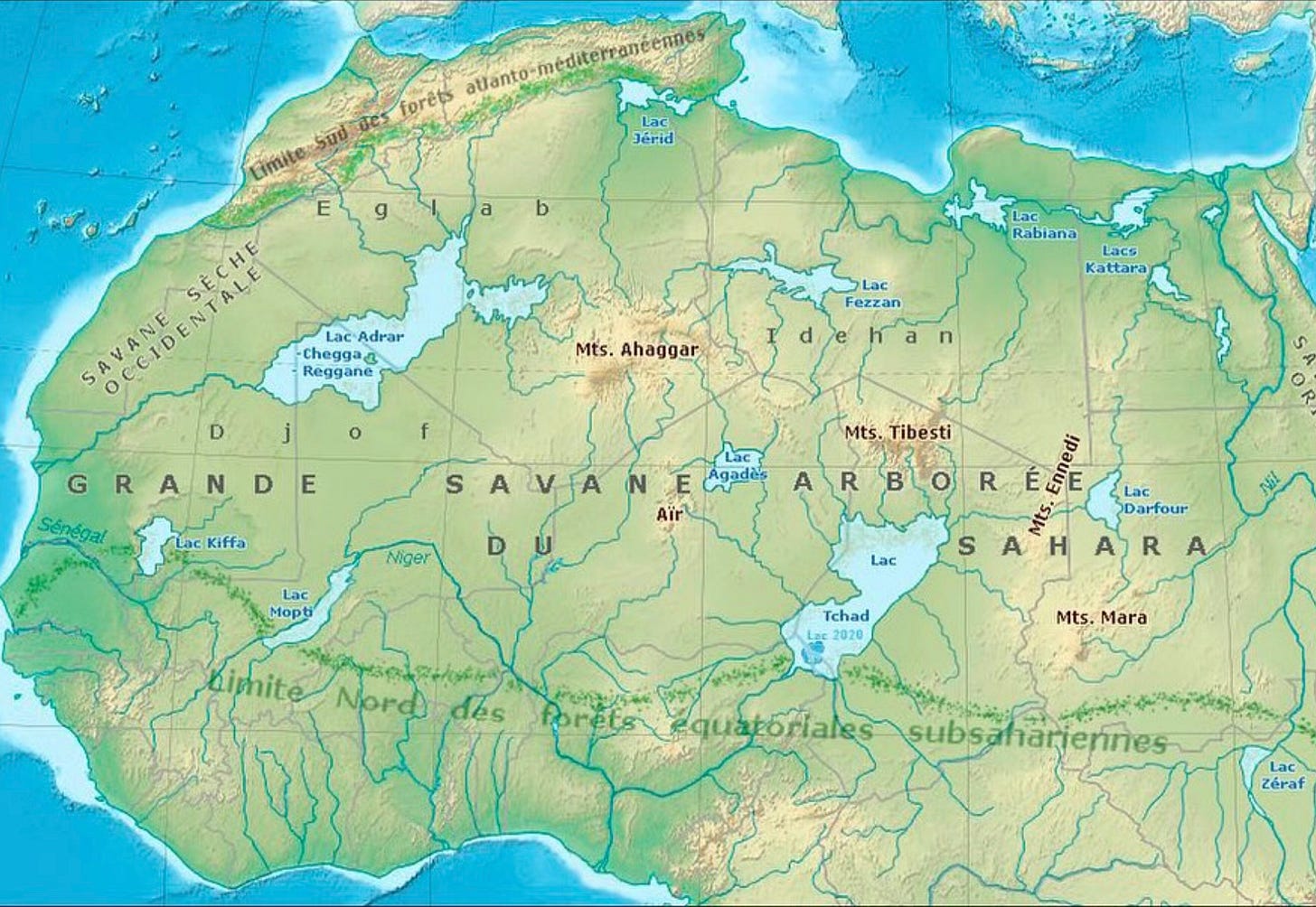
*though if you’re Senegalese, you might not feel well represented.

Wednesday, December 3, 2025

30 Day Map Challenge 2025 - Days 26-30

Here lies the final installment of this year’s 30 Day Map Challenge. November was busy with the last 3 weekends out of town, a brief illness at the end and a new (dog) family member. I was not sure I would be able to finish and while I did this last batch of maps are ones that could use more work.

Day 26 - Transport

This unsatisfying map took several forms before arriving at its current state. The railroads, ports and airports came from the Natural Earth dataset that was the subject of Day 22. I tried just showing railroads with no other context but the result was dull. The most used shipping lanes were added from Marine Vessel Traffic. I wanted to represent them in a way that was clear, but also fuzzy enough to show the many variations of the routes. It’s interesting how the ship traffic largely bypasses Cuba. This map was revisited for Day 30 but without much more success.

Day 27 - Boundaries

Boundaries were drawn from Encyclopedia Brittanica. The flag idea was fun but ultimately does not add much. I’m not sure how those two areas of international waters came to be. They almost mimic the 200 mile exclusive economic zones but the distance is much further.

Day 28 - Black

A black theme for Black Friday. This was fun to make and came out nicely but after seeing what others posted for this theme, I may have been able to do something more interesting.

Day 29 - Raster

These last two days were particularly difficult as I was ill and also traveling. The Gulf of Mexico Dead Zone appears every summer when nutrient rich water, mainly from agriculture enters the Gulf depleting aquatic life of oxygen. The zone’s size varies from year to year but it is always large. The raster image was taken from NASA and only the land part was altered to make it stand out more.

Day 30 - Makeover


I almost didn't get this one done. In fact it really isn’t done. I had the idea to take the map from Day 26, and make it antique style like my Day 24 Portolan Chart map (from this post). I removed airports and thinned out the railroads. Unfortunately it looks too much like the portolan chart map. Time constraints left me unable to improve it.

Well, it’s been fun and I’ve learned at least a few things about the Gulf of Mexico and maybe you did too. Thanks for tuning in to my obsessive compulsions for a full month. Ultimately my tiny protest against the weak “obey in advance” stance of most map companies will be meaningless but it felt good to get it out there. I will never use that other stupid name, if I can help it. Maybe others will join me in that at least.

How does Gulf of Cuba sound? Not great either.